Posts

Nature’s Precision: How Enzymes Are Revolutionising Textile Bleaching

Image
In the realm of textile processing, bleaching plays a crucial role in enhancing fabric brightness and ensuring colour vibrancy. Traditional chemical bleaching methods, while effective, often involve harsh agents like hydrogen peroxide or chlorine compounds that can degrade fibres, consume excessive water, and generate harmful effluents. The growing emphasis on sustainable, high-performance processes has paved the way for an innovative alternative—enzymatic textile bleaching. At the heart of enzymatic bleaching lies a class of enzymes called laccases and peroxidases, which catalyse the breakdown of natural pigments and residual lignin in plant-based fibres like cotton. These enzymes operate under mild conditions, significantly reducing the environmental footprint of the bleaching process. Unlike chemical methods that strip fibres indiscriminately, enzymes exhibit substrate-specific action, targeting only the unwanted colour-causing compounds while preserving fibre integrity. The result?...

The Baking Advantage: How Amylases and Proteases Transform Flour

Image
                                      Baking is both a science and an art, and enzymes play an indispensable role in fine-tuning flour performance to achieve consistently superior results. Among these, amylases and proteases are the star players when it comes to dough conditioning and finished product quality. Amylases, particularly alpha and beta variants, break down starches in flour into simpler sugars. These sugars serve as food for yeast, promoting better fermentation and gas production. The result is improved dough rise, enhanced crumb structure, and a more appealing volume in the final baked product. Amylase activity also influences crust colour and sweetness—contributing to that golden, flavourful finish that consumers love. Proteases, on the other hand, work on the gluten network. By partially hydrolysing gluten proteins, proteases make the dough more extensible and easier to handle. ...

Clarity from Nature: The Crucial Role of Enzymes in Juice Processing

Image
The demand for high-quality, clear fruit juices has risen steadily, driven by consumer preferences for visually appealing and shelf-stable beverages. Achieving this level of clarity is not purely a mechanical process, it requires the precise application of natural biological agents: enzymes. Pectic substances, which are naturally present in fruits, are one of the main culprits behind juice turbidity. These complex polysaccharides cause cloudiness and viscosity, making the juice appear less refined. Pectinases, a group of enzymes including polygalacturonase and pectin lyase, are vital in breaking down these compounds. By depolymerising pectin molecules, these enzymes enable easier filtration and result in a significantly clearer end product. The enzyme action also contributes to increased juice yield. By degrading the structural components of fruit cell walls, enzymes release more juice than mechanical pressing alone. This not only improves productivity but also reduces waste, a win for...

Baking Made Better: Enzymes and the Clean Label Revolution

Image
In an age where consumers are growing increasingly conscious about what goes into their food, the demand for clean label products has transformed the baking industry. Gone are the days when long ingredient lists filled with artificial additives were ignored. Today’s shoppers prefer transparency and naturally derived alternatives. Enzymes have emerged as the unsung heroes of this shift, effectively replacing synthetic emulsifiers, improvers, and preservatives in modern baking. Enzymes are biological catalysts that can improve dough handling, increase loaf volume, and extend shelf life—without the need for chemical additives. In clean label baking, enzymes such as amylases, lipases, and xylanases play pivotal roles. Amylases break down starches into simple sugars, improving fermentation and browning. Lipases enhance dough stability and crumb softness, while xylanases strengthen gluten networks, improving volume and texture. Unlike chemical additives that often serve a single purpose, en...

Catalysts That Endure: The Industrial Power of Immobilised Enzymes

Image
In industrial biotechnology, few innovations have proven as transformative as immobilised enzymes. These stable, reusable biocatalysts are redefining efficiency in large-scale production by offering long-term operational performance and consistent results across cycles. Their unique ability to withstand harsh processing conditions has made them invaluable in sectors ranging from pharmaceuticals and food to biofuels and textiles. At the heart of their appeal lies their longevity. Immobilised enzymes are affixed to inert carriers—often made of materials like silica, synthetic polymers, or natural gels—which protect the enzyme structure and enhance resilience. This structural support significantly extends the enzyme's functional lifespan, even under stressors such as heat, pH fluctuations, or mechanical agitation. Their reusability is another major advantage. Once deployed in a system, these enzymes can be recovered and reused repeatedly with minimal loss of activity. This trait drama...

Unlocking Potential: The Transformative Power of Immobilised Enzymes

Image
In the evolving landscape of industrial biotechnology, one innovation stands out for its precision, efficiency, and sustainability — immobilised enzymes. These enzymes, which are fixed onto a solid support or confined within a matrix, maintain their catalytic activity while offering exceptional operational advantages across diverse applications, from pharmaceuticals and food processing to textiles and biofuels. The concept of enzyme immobilisation revolves around reusability and stability. Unlike free enzymes that are typically used once and then discarded, immobilised enzymes can be used repeatedly across multiple reaction cycles. This not only reduces overall operational costs but also minimises enzyme loss, which is particularly valuable in high-volume, continuous manufacturing processes. Moreover, immobilised enzymes demonstrate superior thermal and pH stability, retaining their activity under challenging industrial conditions. This allows for reactions to occur at optimal conditio...

Raising the Bar: How Enzyme-Based Fermentation Elevates Alcohol Quality

Image
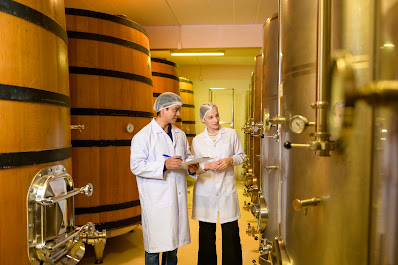
In the realm of alcohol production, the quality of the final product is influenced by multiple factors — one of the most significant being fermentation. Traditional fermentation methods have long relied on naturally occurring enzymes from yeast, but with advances in biotechnology, the integration of enzyme-based fermentation has revolutionised the process. These tailored enzymatic solutions not only improve efficiency but also enhance the overall sensory and chemical profile of the alcohol. Enzymes like cellulases, amylases, and proteases break down complex carbohydrates, fibres, and proteins into simpler fermentable sugars, providing yeast with optimal substrates. This ensures a more complete and controlled fermentation, which directly impacts yield and purity. A more efficient breakdown means fewer residual compounds that can negatively affect the taste, aroma, and clarity of the alcohol. The precision of enzyme formulations also allows producers to adapt to various raw materials — f...